Turnkey fences and property fencing
Wooden fences, plastic-coated mesh and welded 3D panels, metal fences, wicket gates and driveway gates. Tell us how many metres of fence you are dealing with and what the ground looks like, and we will pass the enquiry to a fencing company that works in your area.
- A quote is made after the length, the ground and the slope have been surveyed, not from a single photo.
- You get a written breakdown of materials, the number of posts and the work, item by item.
- The fence is built by a fencing company. If we have no partner in your area, we say so immediately.
Fence materials compared
The five materials that come up most often in enquiries, side by side. The table is indicative; the specific plot always decides.
The table scrolls sideways.
| Material | Service life | Maintenance | See-through | Sloping ground | Where it fits |
|---|---|---|---|---|---|
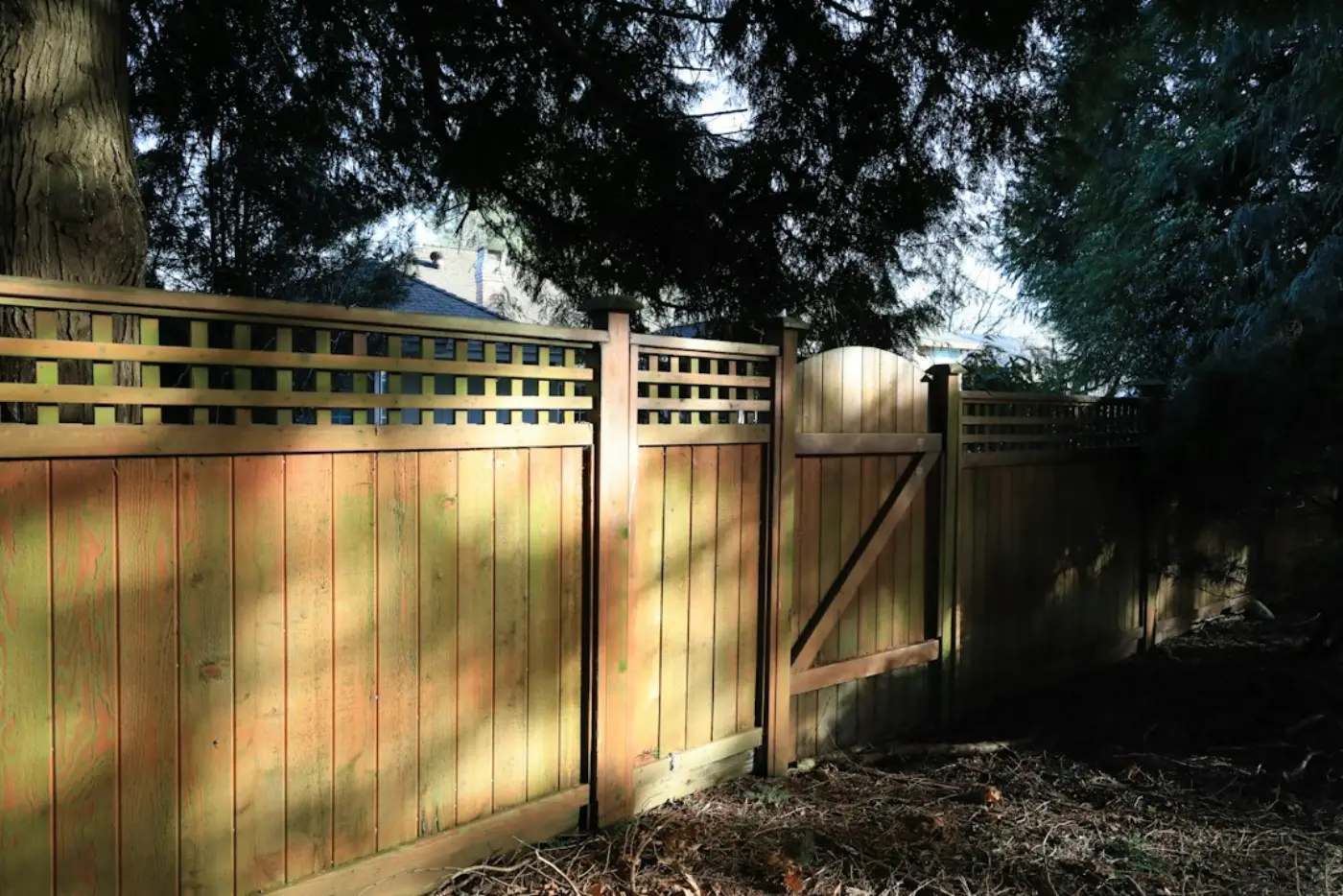
| Wooden fence | Shortest of the five, depends on the timber and the footing | Regular, paint or stain in cycles | From open boards to a fully solid fence | Stepped panel by panel, each step is one more post | A family house garden where the fence should match the building |
| Plastic-coated mesh and 3D panels | Long, the coating protects the wire against corrosion | Minimal, an occasional rinse | See-through | Mesh follows the slope smoothly, panels have to be stepped | Longer boundaries, gardens, animal runs |
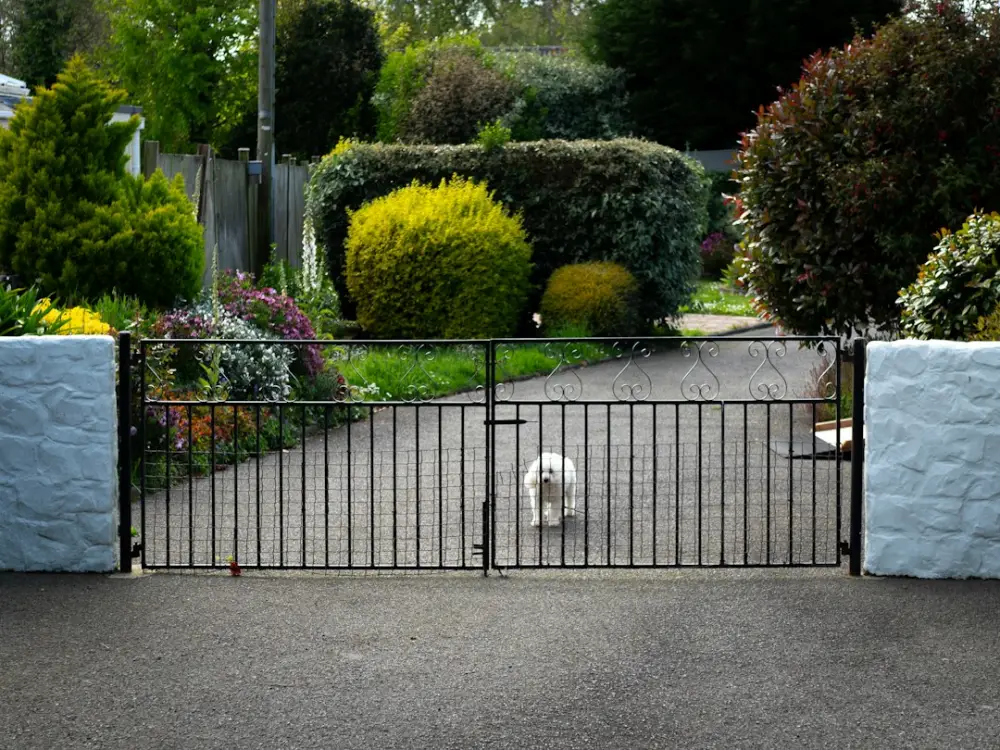
| Metal fence | Long with a good surface finish | Checking the finish, hinges and locks | See-through or solid depending on the infill | Handled by stepping the panels | The street side, a powered gate, a modern house |
| Gabion | The longest, neither stone nor basket ages the way timber does | Almost none | Solid | Needs a stepped footing on load-bearing ground | A busy street, a slope, a fence that also retains soil |
| Concrete fence | Long | Low, an occasional wash | Solid | Stepped unit by unit | A solid boundary with no painting and no upkeep |
We describe service life in words on purpose. The number of years depends on the timber, the surface finish, how damp the plot is and above all on how the fence is founded. A figure that would hold for every plot does not exist.
What we deal with
Pick the type of fence you are interested in. Each page explains what gets installed, what has to be prepared in advance and what to ask about in a quote.
Turnkey fencing of a whole plot
See detailsThe whole boundary including setting out, mixed materials and the entrance.
Turnkey wooden fence
Boards, prefabricated panels and solid fences. Larch, pine, acacia.
See detailsMetal fence, mesh and 3D panels
Plastic-coated mesh, welded 2D and 3D panels, metal fence units.
See detailsWicket gates and driveway gates
Swing and sliding gates, wicket gates, drives and electrical preparation.
See detailsHow an enquiry works
Four steps from your message to a finished fence.
You send the metres and the terrain
An approximate length, the height, the number of gates and whether the plot slopes is enough. A photo from the site helps.
We get in touch and fill in the details
We ask about the things that move the price most: a base wall, the state of the old boundary, access for machinery, ground boards.
A survey on site
The fencing company measures the sides, the slope and the post positions. Only then is a quote put together.
Quote and installation
You get a written breakdown of materials and work. If it fits, a date is agreed.
What drives the price of a fence
A price list makes no sense for fences. Two fences of the same length can differ by an order of magnitude depending on the material, the terrain and what has to be demolished on the boundary.
Here is the list of parameters that actually show up in a quote. No figures, just the things a company will ask you about. Write them to us straight away and the quote will be more accurate and will not need recalculating twice.
- The length of the fence and the number of corners. Every corner means a brace and extra work.
- The height of the fence, and with it the length and diameter of the posts.
- The number of wicket and driveway gates, whether the gate is powered and how it is to be controlled.
- The terrain. A slope is handled by stepping the panels, which means more posts and more concrete.
- A base wall or ground boards instead of an open gap at ground level.
- Removing the old fence, concrete footings and roots.
- The infill material and the surface finish, and with timber the species as well.
- Access for machinery to the boundary and somewhere to unload the material.
- The bearing capacity of the subsoil. Rock and waterlogged clay both make the job dearer, each in its own way.
A fence on the property boundary
A fence stands on a boundary, and that makes it something that does not concern you alone. Three steps are worth taking before anyone starts digging.
Be sure where the boundary runs. A fence built by habit or along an old line need not match what the land register says. If the boundary is unreadable on the ground or disputed, it is settled by a surveyor before any material is ordered.
Talk to your neighbour before you talk to a company. A written agreement on where the fence will run and who pays for it heads off disputes that are harder to settle later than the building work itself.
Check the conditions with your local building authority. Ordinary garden fencing usually does not call for complicated permitting, but it depends on the height of the fence, on whether it borders public space, and on protection and heritage zones. The conditions differ from one municipality and zoning plan to the next, which is why we deliberately quote no specific limits or deadlines here.
If you are not sure, write it in the enquiry. We will check it for you and it will be reflected in the quote. There is more on this in the article A fence on the boundary and your neighbour.
Frequently asked questions
How much does a turnkey fence cost?
We do not publish a price list, because it makes no sense for fences. The price is set by the length, the height, the infill material, the number of gates, the terrain and whether the old boundary has to be demolished. Send us the metres and the terrain and you get a quote for your plot rather than a table figure.
Which fence needs the least maintenance?
Gabions and plastic-coated mesh usually need the least, because they are not painted. Timber is at the other end: it needs paint or stain in regular cycles, but in exchange you can change the shade whenever you like.
Do I need a permit for a fence?
Ordinary garden fencing usually does not call for complicated permitting, but it depends on the height of the fence, on whether it borders public space, and on protection and heritage zones. The specific conditions apply to your municipality, so check them with the local building authority. Write it in the enquiry and we will check it for you.
Can a fence be built on a slope?
It can. Wooden and metal panels are stepped panel by panel on a slope, while mesh follows the ground smoothly. Gabions and concrete units need a stepped footing. In every case it means more posts and more concrete, so tell us about the slope right at the start.
What is a ground board and do I need one?
It is a concrete board between the posts at ground level that closes the gap under the fence. It helps where nothing should pass underneath and where the ground would otherwise have to be levelled laboriously. Without one the fence is cheaper, but a gap stays at the bottom.
How long does installation take?
It depends on the length and the material, but one thing decides it: posts set in concrete need to cure before the infill is hung on them. That is why installation is usually split into two visits with a gap between them. The company building the fence will confirm the actual dates.
Tell us the length of your fence
An approximate length, the height you want and whether the plot slopes is enough to start. We will fill in the rest.
We pass the enquiry to a fencing company that works in your area. If we have no partner there, we will tell you straight away instead of leaving you waiting.
Phone: 775 654 443
E-mail: info@oploceni-na-klic.cz